Reviewed by Mayer Hyman, Payments Specialist | Reviewed for accuracy July 2026
Key Takeaways
- Digital wallets now account for the leading share of e-commerce payment volume worldwide, 56% globally and 40% in the US, ahead of credit cards, debit cards, and buy-now-pay-later combined (Worldpay Global Payments Report, 2026).
- US digital wallet use is projected to keep climbing through 2030, both online and in physical stores, as more consumers default to tap-to-pay over typing in card details (Payments Dive, 2026).
- When a preferred payment method isn’t available at checkout, that moment of intent doesn’t convert, it disappears, making wallet support a conversion issue, not just a convenience feature.
- Wallet-enabled checkout is no longer a niche or generational trend; it’s becoming the default starting point of the shopping journey across age groups.
Digital Wallets Are Becoming the Starting Point of the Shopping Journey
Digital wallets now account for the leading share of e-commerce payment volume worldwide, 56% globally and 40% in the US, ahead of credit cards, debit cards, and buy-now-pay-later combined. What looked like a fad is now the starting point of the shopping journey: consumers expect to tap, not type, and increasingly they expect to do it everywhere, whether they’re paying in an app, at a physical register, or checking out on a phone.
The data backs up what’s happening anecdotally at checkout. Globally, digital wallets accounted for 56% of e-commerce payment volume in the most recent reporting year, more than credit cards, debit cards, account-to-account transfers, and buy-now-pay-later combined. In the US, digital wallets were used in 40% of online transactions, ahead of credit cards, debit cards, and BNPL individually, and that share is projected to keep growing through 2030 for both online and in-store purchases (Worldpay Global Payments Report, 2026; Payments Dive, 2026).
From Wallet Trend to Default Behavior
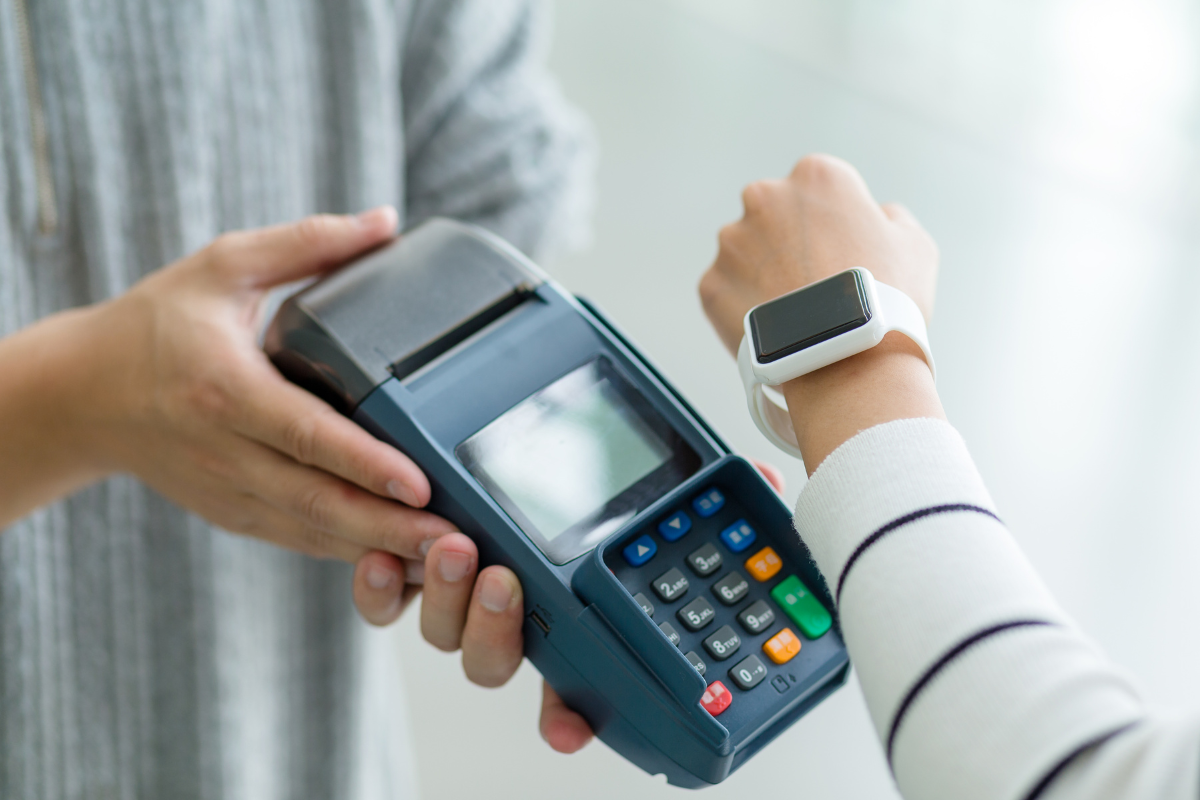
One in five digital wallet adopters now regularly leave home without a physical wallet, relying instead on their phone or wearable to pay in physical locations (McKinsey, 2024). That’s not a Gen Z-only trend anymore. It’s a broader behavior shift that spans age groups as tap-to-pay becomes the path of least resistance at checkout.
For businesses, this creates a real gap between demand and readiness. If a customer reaches for their watch or phone and can’t pay instantly, that moment doesn’t convert. It disappears. Every missed tap is a missed sale, and as wallet adoption climbs, the cost of not supporting it climbs with it.
Why Payments Are Moving Upstream
Digital payments are no longer just about enabling transactions. They’re becoming part of how consumers discover, decide, and buy. Shoppers increasingly begin their buying journey inside digital payment ecosystems themselves, tapping a wallet icon or a saved payment method before they’ve fully committed to the purchase, rather than only finishing the journey there. That changes the role payments play in the funnel: payment infrastructure is no longer just the last step of checkout, it’s part of the experience that shapes whether the checkout happens at all.
This upstream shift is visible in how major payment platforms have rolled out wallet support. When a payment gateway like Authorize.net enables Apple Pay and Google Pay for its merchants, it’s one example of a broader industry pattern: processors and gateways adding wallet acceptance because merchants who don’t offer it are increasingly leaving conversions on the table. It’s also a symptom of a bigger shift already underway — see The end of multi-gateway chaos for how merchants are consolidating the sprawl of gateways and wallets into a single stack.
What This Means for Merchants
The opportunity isn’t just to accept more payment types. It’s to meet customers earlier, reduce friction across every touchpoint, and make sure the payment experience matches how people actually want to buy. Digital wallets are no longer optional infrastructure sitting behind a “buy now” button. They’re a growth lever tied directly to conversion.
If your payments strategy hasn’t caught up to this shift, now is the time to look at it. Missed taps are missed sales, and the businesses closing that gap now are the ones capturing demand that’s already showing up at checkout.
Let’s review your current setup and identify opportunities to capture more conversions and optimize costs.
FAQ
Why are digital wallets becoming the starting point of the shopping journey instead of just the payment step?
Consumers increasingly interact with saved payment methods and wallet apps earlier in the buying process, not just at the final checkout screen, which means payment experience now influences purchase decisions rather than just completing them.
How big is digital wallet adoption at this point?
Digital wallets accounted for 56% of global e-commerce payment volume and 40% of US e-commerce transactions in the most recent Worldpay Global Payments Report, ahead of credit cards, debit cards, and buy-now-pay-later.
What happens if a checkout doesn’t support a customer’s preferred digital wallet?
That moment of purchase intent typically doesn’t convert to a delayed attempt, it disappears. Shoppers who can’t pay the way they intended to are more likely to abandon the purchase entirely rather than switch payment methods.