Reviewed by Mayer Hyman, Payments Specialist | Reviewed for accuracy July 2026
Key Takeaways
- Rising processing costs are rarely one thing: interchange shifts, more expensive card types, growth in card-not-present transactions, and opaque pricing models all compound at once.
- Premium and rewards cards routinely carry higher interchange than standard cards, in some cases climbing from under 1% on a basic debit card to above 2% on a premium travel rewards card (Forbes Advisor, 2025).
- Visa is phasing out its Level 2 interchange program in favor of the Commercial Enhanced Data Program (CEDP), which requires more rigorous transaction data and applies a 0.05% participation fee on qualifying commercial card transactions (Versapay, 2025).
- Businesses that cannot supply clean, validated line-item data risk losing access to preferential interchange rates altogether, not just paying a modest surcharge.
Why Payment Processing Costs Keep Rising
Credit card processing fees are increasing because several structural shifts are compounding at once: interchange fees keep moving, customers are using more expensive premium and rewards cards, more payments are happening online, and pricing models are often opaque. In fact, here’s what’s actually driving it:
1. Interchange Fees Keep Moving
Interchange is the largest portion of your processing cost. Specifically, as governments push card networks to reduce interchange rates, additional fees are often introduced to make up the difference, and as a result those costs are passed directly to you.
2. Your Customers Are Using More Expensive Cards
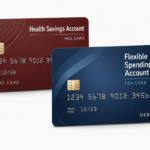
These include rewards cards, corporate cards, and premium cards.
In particular, customers get points, travel, and cashback. However, those perks are funded by higher interchange fees paid by businesses.
The gap is real and well documented. For example, a standard consumer credit card at a typical retail terminal runs around 1.5% to 1.65% plus a per-transaction fee. Premium travel rewards cards, however, can carry interchange above 2%, and in some published rate comparisons as high as 2.1% (Forbes Advisor, 2025). Premium, rewards, and business credit cards cost more than standard cards largely because issuing banks use that interchange revenue to fund the rewards programs themselves.
3. More Payments Are Happening Online
Indeed, card-not-present transactions now dominate:
- Higher fraud risk
- More security requirements
- More infrastructure
Because of this, online transactions typically carry higher interchange than in-person payments, since card-not-present transactions carry more fraud risk for issuers.
4. Lack of Transparency in Pricing Models
On the other hand, flat-rate and tiered pricing make things look simple, but may hide the true costs.
- You don’t see true interchange
- You can’t optimize transaction types
- You may be overpaying without realizing it
5. Your Processor Matters
Similarly, pricing can vary widely, and a lack of visibility can make it hard to see where costs are coming from or where exactly you’re overpaying.
The Visa Level 2 Pricing Change
Meanwhile, there’s another shift already underway that many businesses are underestimating: Visa is retiring its long-standing Level 2 interchange program for commercial cards and replacing it with the Commercial Enhanced Data Program, or CEDP.
The rollout has happened in stages. First, Visa introduced a 0.05% participation fee on commercial card transactions carrying Level 2 or Level 3 data starting in 2025. Then it tightened enforcement so that only transactions with verified, complete data qualify for the best rates. Since then, Visa has also raised Level 2 interchange rates on business cards. As a result, the program is winding down entirely, with CEDP becoming the only path to preferential commercial card rates going forward (Versapay, 2025).
Specifically, here’s what’s changing:
- Level 2 is being phased out and eventually eliminated for commercial cards
- CEDP (Commercial Enhanced Data Program) replaces it as the path to preferential rates
- Only complete, verified transaction data qualifies for the lowest published rates
- Visa’s validation checks are stricter about data quality, so placeholder or generic line-item data no longer qualifies
- A 0.05% participation fee applies to qualifying commercial card transactions carrying enhanced data
What “Good Enough” Data No Longer Covers
For years, businesses could reduce fees by submitting basic enhanced data, like tax amounts, without much rigor behind it. However, that middle ground is closing.
What this means in practice: “good enough” data is losing its value. Therefore, to access better rates, you increasingly need:
- Line-item detail
- Product and service codes
- Clean, structured, validated data
If your systems can’t support that level of detail, you risk losing access to preferential commercial card rates altogether on transactions that used to qualify under Level 2. This is especially true if you relied on that program to keep costs down. However, no verified, published figure shows exactly how much a given business’s costs would rise. Therefore, treat any specific percentage you see quoted elsewhere with some skepticism until it’s confirmed against your own card mix and processor.
This doesn’t stay behind the scenes, however. Instead, these changes show up in how businesses operate. They often appear as surcharges at checkout or a shift toward encouraging customers to pay with debit or ACH (Automated Clearing House). As a result, what looks like a backend fee change quickly becomes a customer experience decision.
The Truth Is
That said, processing costs are a byproduct of your payment environment. Specifically, they reflect:
- Customer payment behavior
- Processing methods
- Pricing structure
- Data quality and integrity
As a result, we’re entering a new phase:
- Better data means lower costs
- Better visibility means better decisions
- Outdated systems mean higher fees
The rules are changing. Therefore, it’s time to evaluate how your payments are performing.
Happy to connect with the team at Cartis Payments if you’re interested in learning where you may be overpaying. Fee pressure is only one part of the picture — for a broader look at what eCommerce companies actually prioritize when picking a payments partner, see What do eComm companies want more than anything?
FAQ
Why do premium and rewards cards cost businesses more to accept?
Card issuers fund rewards, cashback, and travel perks through higher interchange fees charged to merchants. Published rate comparisons show premium and rewards cards commonly carrying meaningfully higher interchange than standard consumer cards.
What is replacing Visa’s Level 2 interchange program?
Visa is phasing out Level 2 for commercial cards in favor of the Commercial Enhanced Data Program (CEDP), which applies a 0.05% participation fee on qualifying transactions and requires more rigorous, validated transaction data to access preferential rates.
Is it true that processing costs could rise by a fixed percentage under the new Visa rules?
There is no verified, published figure showing a specific across-the-board cost increase. The real risk is that businesses relying on Level 2 data submissions without clean, validated line-item detail may lose access to preferential rates, but the actual impact depends on your card mix and current data quality.